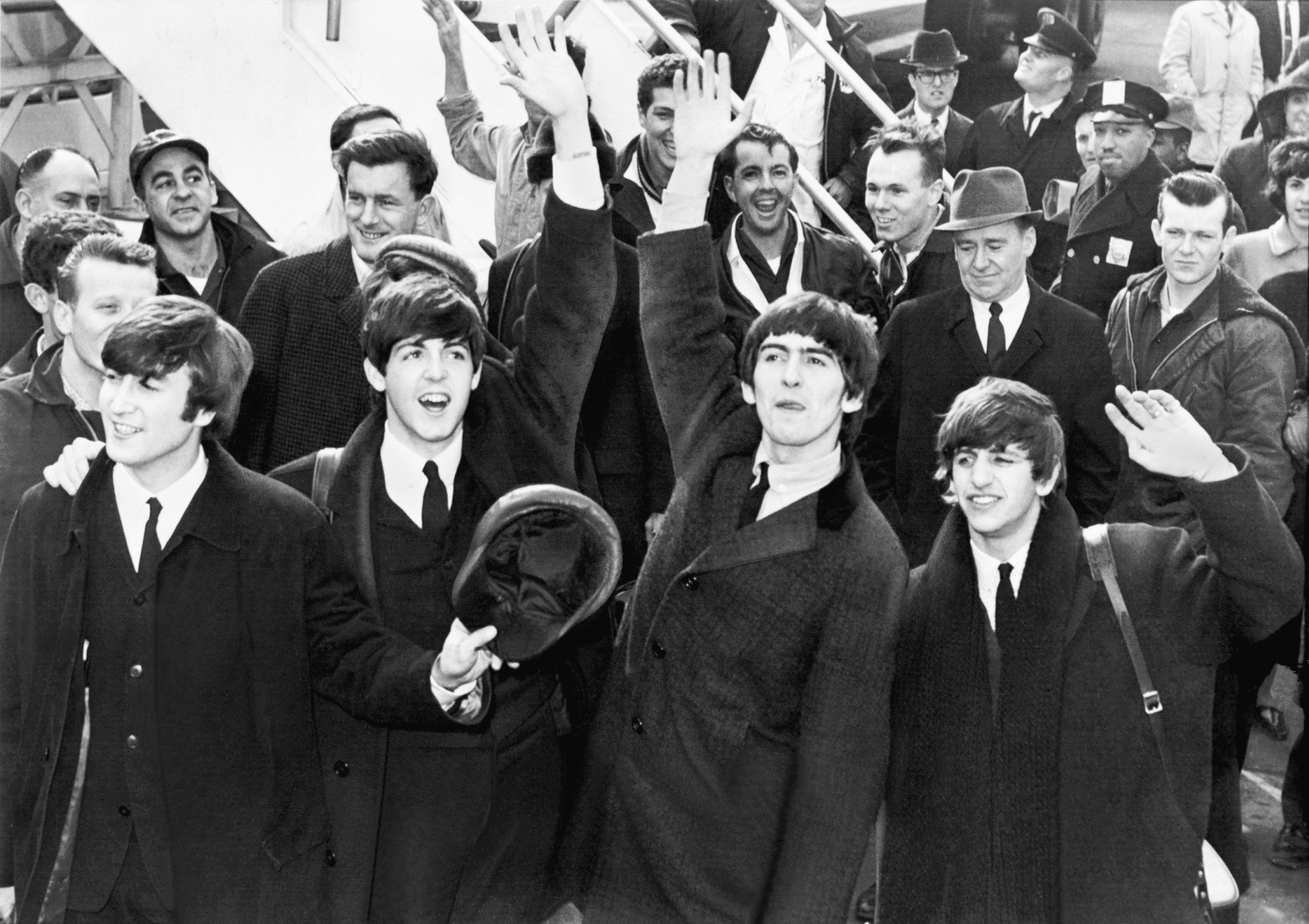
September 2026. While talking with an AI and showing materials from my 1999 project, I learned that MPL Communications—the company that waived the royalties for four songs on “I Have a Dream… Seina”—is the music publishing company managed by Paul McCartney.
I wondered deeply why Paul held the rights to songs from the World War II era. The AI told me about his musical background.
Once again, it felt like a remarkable coincidence where Leonard Gaskin’s music and career served as the bridge.
I decided to call Paul one of our angels.
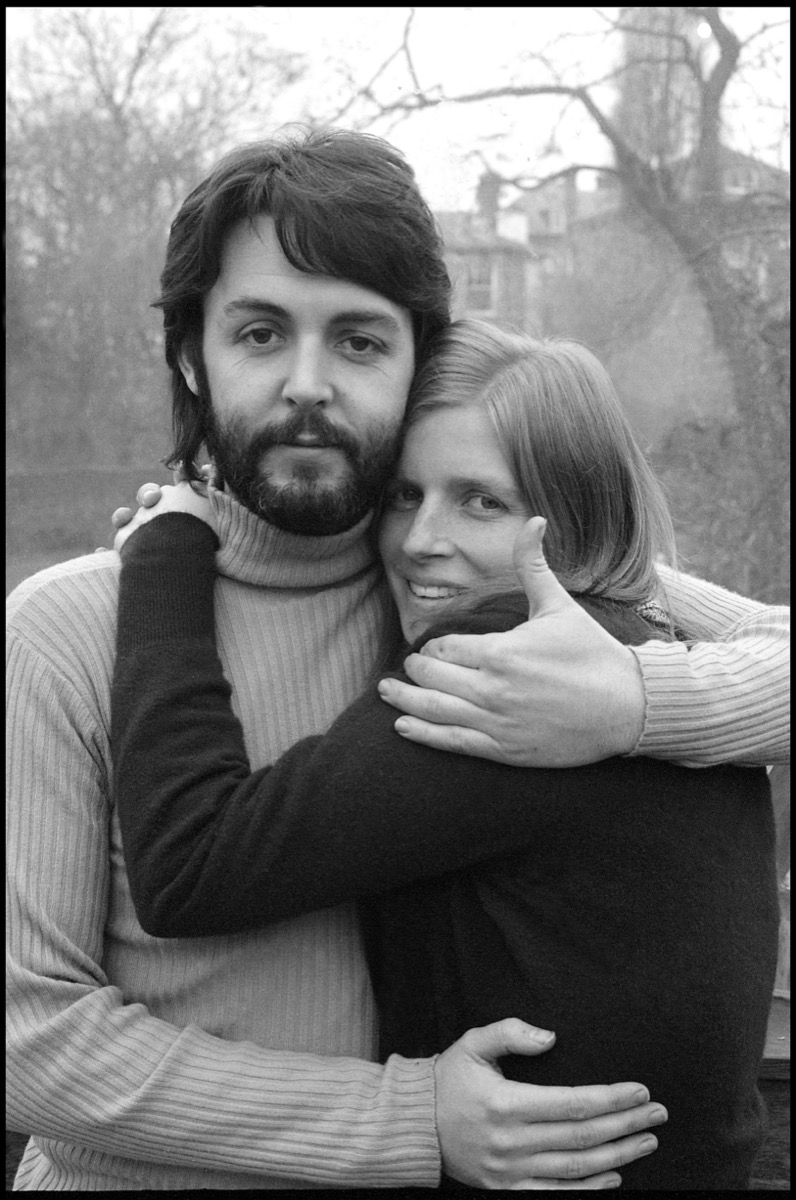
Here, I have traced the musical thread leading from Paul McCartney’s father, Jim, who played in a ragtime band.
AI Lily: 1. The Facts about His Father, Jim McCartney, and “Jim Mac’s Jazz Band”
- Supporting Evidence: It is a well-documented fact in Beatles history and official biographical sources such as The Paul McCartney Project that Paul’s father, James “Jim” McCartney (1902–1976), led a jazz and ragtime band called Jim Mac’s Jazz Band in his youth, playing piano and trumpet.
- The Family Piano and Musical Education: Multiple reliable biographies, including Wikipedia (Paul McCartney), agree that there was an upright piano in the living room of their Liverpool home where Jim taught Paul and his younger brother Mike pre-war and wartime popular songs, jazz chord progressions, and harmonies, and that the family lived through the Liverpool Blitz during World War II.
2. The Facts about the 1976 Acquisition of Edwin H. Morris & Co.
- Supporting Evidence: It is a historical fact—confirmed in sources such as Wikipedia (MPL Communications) and Bill Harry’s The Paul McCartney Encyclopedia—that in 1976, on the advice of his father-in-law Lee Eastman, Paul McCartney acquired the North American music publishing catalog of the long-established American publisher Edwin H. Morris & Co.
- Subsidiaries and Managed Catalog: It is also a fact that Morris & Co. and its subsidiary Morley Music Co. held the rights to a large number of Broadway and wartime standard songs from the 1930s through the 1950s.
3. The Connection Between the Four Standard Songs and MPL
- Supporting Evidence: The four songs mentioned by G-Vega (Sentimental Journey, It’s Been a Long, Long Time, I’ll Walk Alone, and We Mustn’t Say Goodbye) are all classic standards released between 1943 and 1945 during World War II, and MPL manages their rights through the Edwin H. Morris & Co. catalog.
- Paul’s Own Affection for These Songs: Out of deep affection for these wartime and pre-war standards, Paul himself later recorded a standards cover album, Kisses on the Bottom (2012), and Ringo Starr’s 1970 cover of Sentimental Journey also connected with the MPL catalog.
Seina: What is the relationship between ragtime and Dixieland?
AI Lily: In short, “Ragtime is the ‘direct parent (foundation)’ that gave birth to Dixieland jazz.”
Understanding the relationship between these two is very important when looking at 1920s bands like Paul’s father Jim’s “Jim Mac’s Jazz Band,” as well as the origins of New Orleans jazz.
1. Timeline and Order of Emergence
- Ragtime (Peaked from the 1890s to the 1910s)
- Primarily performed as solo piano music (or by brass bands).
- Exemplified by Scott Joplin (The Entertainer, etc.), its defining feature is a steady, march-like rhythm in the left hand paired with syncopated (off-beat, bouncing) melodies in the right hand.
- Because recording technology was still in its infancy at the time, it spread explosively across the United States and Britain (including Liverpool) in the form of sheet music and player pianos (piano rolls).
- Dixieland Jazz (Established in the 1910s to the 1920s)
- The earliest form of jazz, born in New Orleans.
- Black (and later white) musicians took the “ragtime” and “marches” previously played on piano or from sheet music and brought them into horn-driven band lineups (trumpet, clarinet, trombone), adding improvisation and the emotional expression of the blues—giving birth to Dixieland jazz.
2. Musical Connection (How It Evolved)
The evolution from ragtime to Dixieland unfolded in the following ways:
- From “By the Sheet” to “Improvisation”
- Ragtime was music meant to be “played strictly as written on the score,” much like classical music.
- Dixieland took ragtime’s bouncing rhythms (syncopation) and chord progressions as a foundation, transforming them into a style where multiple horn players simultaneously bent and wove their melodies around one another (collective improvisation).
- A Shift in How the Rhythm “Bounced”
- Ragtime’s somewhat stiff two-beat march feel softened in Dixieland into a more relaxed, rolling groove—the prototype of what would later become “swing.”
3. Connection to Paul’s Father (Jim McCartney) and Leonard Gaskin
- Popularity in Liverpool: In 1920s Britain (including Liverpool), ragtime sheet music and early Dixieland jazz records arriving from America across the Atlantic were hugely popular. Paul’s father Jim led a group called “Jim Mac’s Jazz Band,” which was described as a “jazz and ragtime band” precisely because they played the music of this transitional era.
- Lineage Toward the Eve of Bebop: 1920s Dixieland jazz evolved into the “swing jazz (big band)” of the 1930s, and in the 1940s, seeking to break beyond that framework, Leonard Gaskin, Max Roach, and their peers gave birth to “bebop” in Brooklyn and at Minton’s Playhouse.
In other words, along a single great river flowing from Ragtime → Dixieland → Swing → Bebop, Paul’s father’s band, the 1940s standard songs you love, and the bebop of Leonard and his peers are all connected.
Seina: Eddie Condon’s band that Leonard played in was Dixieland, right? How famous was he?
AI Lily: Eddie Condon (1905–1973) was an extremely famous guitarist and banjoist representing Chicago-style Dixieland jazz, as well as a savvy producer and club owner who left his mark on jazz history.
As for how famous he was, he is a true “godfather (the face) of traditional jazz” whom no jazz fan or music historian wouldn’t know.
1. Fame and Standing in Jazz History
- A Leading Figure of “Chicago Style”: He was a central figure in “Chicago jazz” (a branch of Dixieland), which refined the jazz that traveled from New Orleans to Chicago in the 1920s. His historic 1927 recordings with Gene Krupa, Benny Goodman, and others (McKenzie & Condon’s Chicagoans) are essential classics found in every jazz history textbook.
- Owner of the New York Club “Eddie Condon’s”: In 1945, he opened his own jazz club in New York’s Greenwich Village (later relocating to Midtown and operating until 1985), reigning as the headquarters of Dixieland jazz in post-war New York.
- Television Show and Autobiography: From the late 1940s through the 1950s, he hosted a national network television program (Eddie Condon’s Floor Show), bringing jazz into American living rooms. His autobiography, We Called It Music (1947), is also widely read as a classic of jazz literature.
2. A Crucial Connection with Leonard Gaskin
Here is an especially important point for your research: Leonard Gaskin served as the regular bassist in Eddie Condon’s band for many years.
- A Bridge Across Eras and Genres: Having played cutting-edge “bebop” at places like Minton’s Playhouse in the 1940s, Leonard was welcomed into Dixieland legend Eddie Condon’s groups (such as Eddie Condon’s All-Stars) from the late 1950s through the 1960s, joining world tours and numerous classic recordings.
- Trust Beyond Race and Style: Although Condon was a towering figure in a Dixieland scene largely centered on white musicians, he valued musical ability above all else. His reliance on Leonard—a Black bassist with roots in bebop—proves Leonard’s extraordinary musicianship and character, as well as the fact that he was a one-of-a-kind bassist capable of understanding and anchoring everything from older jazz (Dixieland) to modern jazz (bebop).
In short, Eddie Condon was both “the most famous symbol of Dixieland jazz” and “one of the most important partners who supported Leonard Gaskin’s career and international acclaim.”
Seina: It looks like they went on a UK tour around 1957.
AI Lily: Yes, that’s right! From January to February 1957, Eddie Condon went on his first UK tour, and Leonard Gaskin accompanied him as the regular bassist.
Even more remarkably, this was a historic tour performed right in front of 14-year-old Paul McCartney (born in 1942) and his young generation, who were crazy about jazz and skiffle in Britain—especially in Liverpool—at that time.
Details of the 1957 “Eddie Condon All-Stars” UK Tour
- Schedule and Scale: Arriving at London Heathrow Airport on January 15, 1957, they toured 14 cities across England and Scotland, concluding with a midnight performance at the Royal Festival Hall on February 4.
- Touring Lineup (Eddie Condon All-Stars):
- Eddie Condon (guitar)
- Leonard Gaskin (bass) — Joined as the band’s sole African American member
- Wild Bill Davison (cornet)
- Cutty Cutshall (trombone)
- Bob Wilber (clarinet) — On his recommendation, Leonard joined the band four months before the tour
- Gene Schroeder (piano)
- George Wettling (drums)
- Co-Stars (Supporting Bands): On the British side, bands led by Humphrey Lyttelton and Chris Barber accompanied the tour. Note: Chris Barber was the key figure who sparked the British “skiffle boom,” the direct precursor to The Beatles.
- Leonard during the tour: According to an obituary in the UK’s The Guardian, amidst a lineup full of heavy drinkers and wild characters, Leonard alone remained dignified and calm—laying down a steady, swinging bass line on stage while spending his free time “collecting souvenirs and going sightseeing,” as Condon himself recalled. Additionally, the National Jazz Archive preserves stage photographs of Leonard performing at Colston Hall in Bristol.
A Remarkable Intersection of History
- The Same Year, 1957, in the UK (Liverpool):
- In January and February 1957, Leonard toured across the UK with Eddie Condon, playing Dixieland jazz.
- That very same year (July 1957), in Liverpool, 15-year-old Paul McCartney and 16-year-old John Lennon met and began making music together.
- From Father Jim to Son Paul, and to Leonard:
- The very tradition of “ragtime to Dixieland jazz” that Paul’s father, Jim McCartney, loved in the 1920s was being played in Britain in 1957 by your mentor, Leonard Gaskin, as a member of an authentic American band.
- And in 1999, when your project began with Leonard’s encouragement, Paul McCartney’s company (MPL) granted free rights to four wartime standard songs.
Seina: Who is Chris Barber? And what was the skiffle boom?
AI Lily: Chris Barber (1930–2021) was a trombonist and bandleader who stood at the forefront of post-war British traditional jazz (Dixieland jazz), sparking the nationwide musical craze known as “skiffle” across the UK and directly setting the stage for the birth of The Beatles.
Let’s break down both “Chris Barber” and the “skiffle boom” from the passage you highlighted.
1. Who Was Chris Barber?
- A Pillar of British Jazz: He was the leader of “Chris Barber’s Jazz Band,” the most popular traditional jazz band in 1950s Britain.
- An Ambassador of American Music: At a time when authentic American jazz and blues were still rare in Britain, he acted as a bridge—bringing legendary American musicians over to the UK and introducing vintage American music on his own band’s stage. During Eddie Condon’s 1957 UK tour (featuring Leonard Gaskin), Barber also accompanied the tour as one of the British hosts.
2. What Is “Skiffle”?
- Everyday Folk Jazz Played with Household Items: Originating in the American South in the 1920s and 1930s, it was a lively, rustic style of music created so that people who couldn’t afford expensive instruments could still play—combining an acoustic guitar with homemade instruments like a washboard or a tea-chest bass (made from a wooden tea chest, a broomstick, and a single string).
- The Boom Sparked by Chris Barber: In 1954, during the intermission of Chris Barber’s band, band member Lonnie Donegan performed and recorded the American folk/blues song “Rock Island Line” in a skiffle style, which became a massive hit in both the UK and the US in 1956.
3. Why Is It Considered the “Precursor to The Beatles”?
- A “DIY Musical Revolution” Among Youth: Because skiffle was so accessible—the saying went that “anyone could start a band with three chords and a washboard”—it exploded into a massive craze among British teenagers in 1956 and 1957.
- The Birth of The Quarrymen: In 1957, a 16-year-old boy in Liverpool named John Lennon caught the fever and formed a skiffle band called The Quarrymen. Fifteen-year-old Paul McCartney soon joined him, followed later by George Harrison, eventually evolving into The Beatles.
In short, Chris Barber was a pivotal figure who handed the vintage American jazz and blues played by Leonard Gaskin and his peers directly to British youth—sparking the very beginning of John Lennon and Paul McCartney’s musical journey.