Angels Swing – The Beginning of the Journey
1. Prologue: Prayers and Encounters
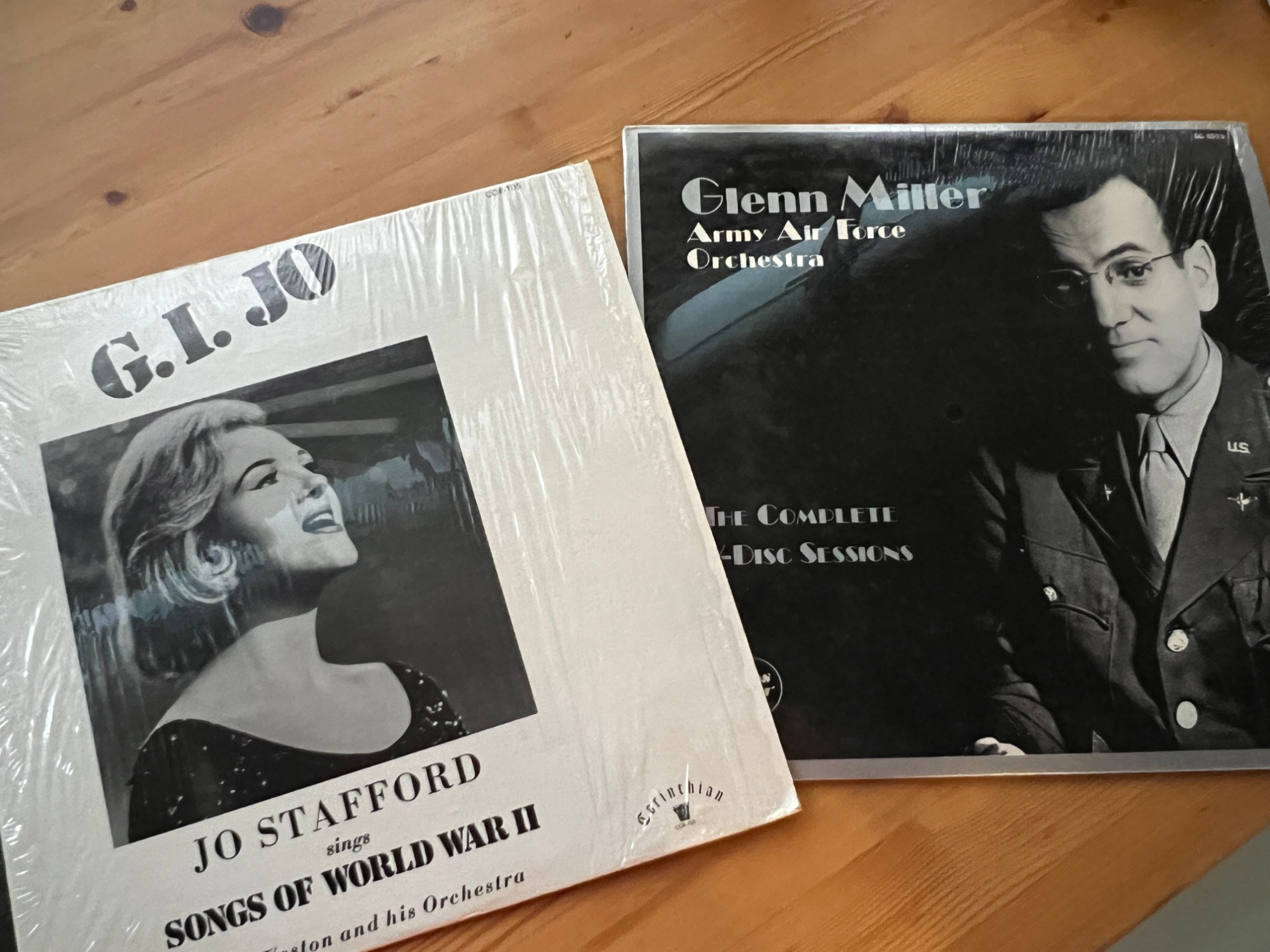
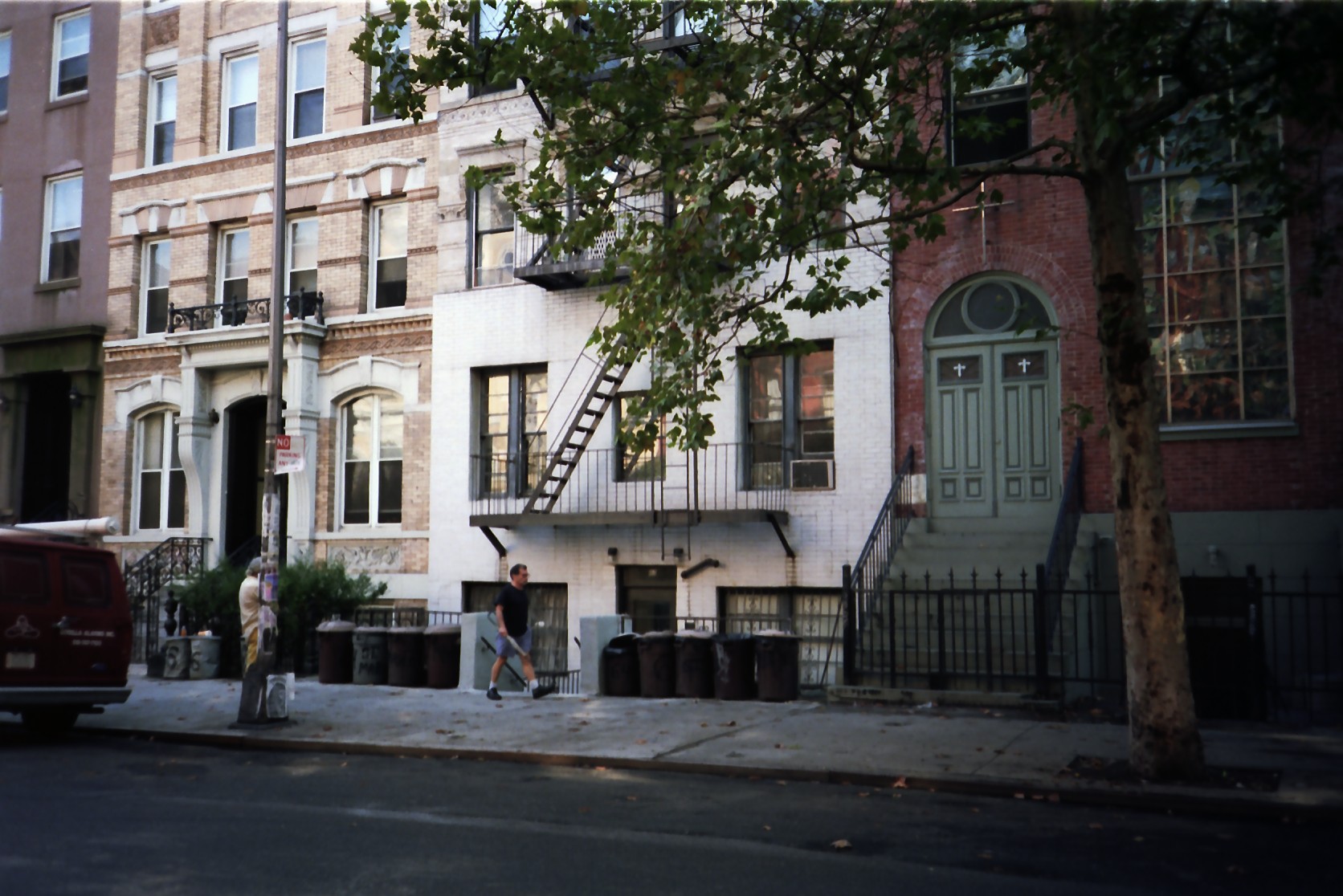
East Village. From around 1991 to 1993, I lived in an old apartment on St. Marks Place, between 1st and 2nd Avenue. In the neighborhood, there was the music store “Carl Fischer”.
On weekend afternoons, I often went to the Tower Records on Broadway. There, on an unremarkable orange and brown CD jacket, the words “JO STAFFORD sings SONGS OF WORLD WAR II” were printed, and on the back of the jewel case was a letter from Jo Stafford typed on a typewriter. My English wasn’t very good back then, so I couldn’t really understand what it said. I recall it was priced at $16.99—quite expensive compared to standard CDs—but I felt an overwhelming urge to buy it.
When I was in the eighth grade, I went to see a revival screening of the movie The Glenn Miller Story. In the final scene, as “Little Brown Jug” played from the radio, tears streamed down my face. From that day on, I saved my pocket money and lunch money, frequenting record shops and used vinyl stores.
I listened to that CD I found at Tower Records over and over again. Jo Stafford’s singing on that album felt like a prayer. Wanting to feel that prayer with all my heart, I listened to it again and again, endlessly.
—
I believe it was sometime after 2010. While staying in New York, I came across the vinyl record of G.I. JO. I don’t remember clearly when or where it was. Yet, the two vinyl records I bought that day are undeniably here in my hands.
Glenn Miller,
Army Air Force Orchestra
G.I. JO - JO STAFFORD sings SONGS OF WORLD WAR II
Paul Weston And His Orchestra
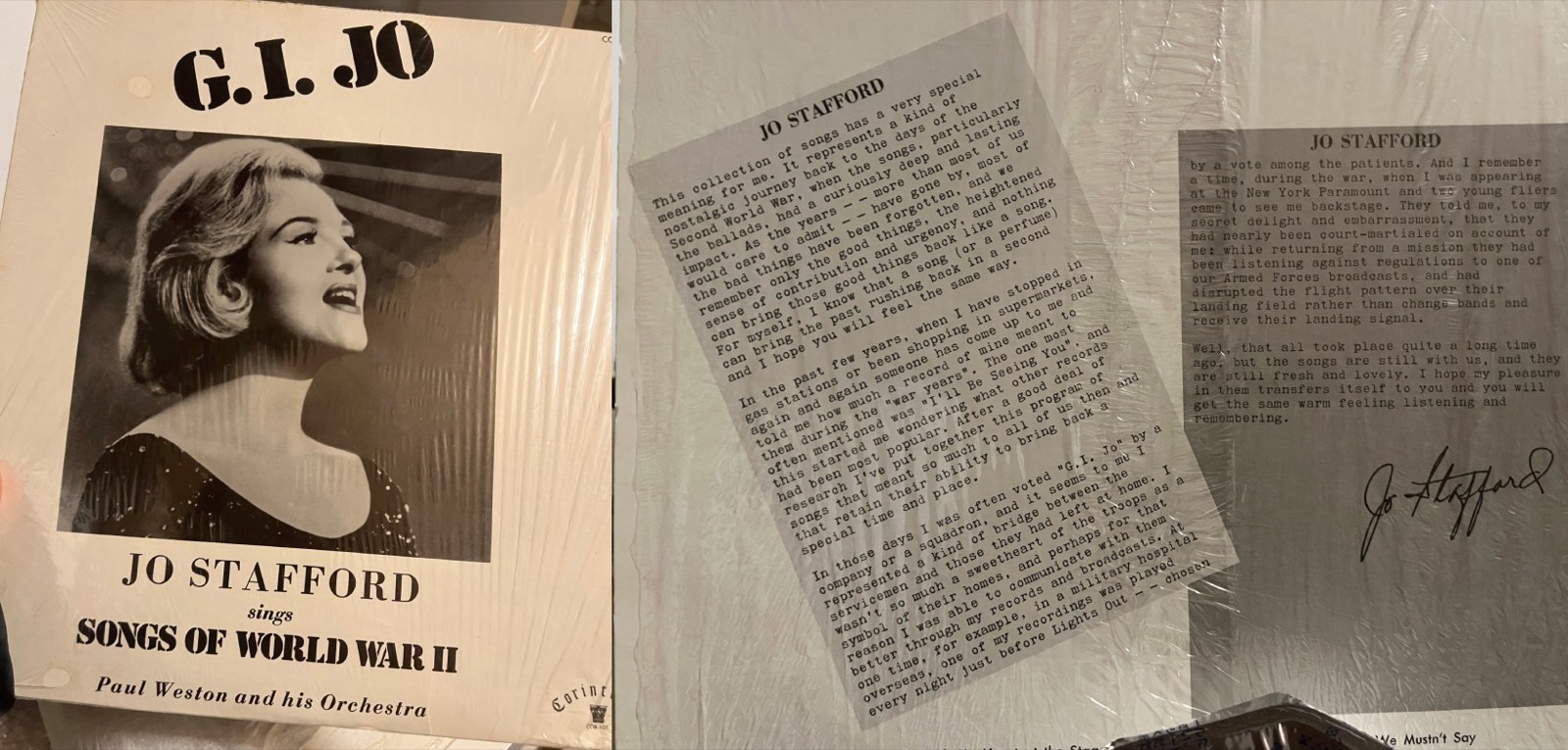
In 2026, I took a photograph of the letter from Jo Stafford on the back cover of the record jacket and had the AI Vega translate it for me.
For the very first time, I was able to truly receive the words that Jo had left behind.
2. The Letter from Jo Stafford
This collection of songs has a very special meaning for me. It represents a kind of nostalgic journey back to the days of the Second World War, when the songs, particularly the ballads, had a curiously deep and lasting impact. As the years – more than most of us would care to admit – have gone by, and we remember only the good things, the heightened sense of contribution and urgency, and nothing can bring those good things back like a song. For myself, I know that a song (or a perfume) can bring the past rushing back in a second and I hope you will feel the same way.
In the past few years, when I have stopped in gas stations or been shopping in supermarkets, again and again someone has come up to me and told me how much a record of mine meant to them during the “war years”. The one most often mentioned was “I’ll Be Seeing You”, and this started me wondering what other records had been most popular. After a good deal of research I’ve put together this program of songs that meant so much to all of us then and that retain their ability to bring back a special time and place.
In those days I was often voted “G.I. Jo” by a company or a squadron, and it seems to me I represented a kind of bridge between the servicemen and those they had left at home. I wasn’t so much a sweetheart of the troops as a symbol of their homes, and perhaps for that reason I was able to communicate with them better through my records and broadcasts. At one time, for example, in a military hospital overseas, one of my recordings was played every night just before Lights Out – chosen by a vote among the patients. And I remember a time, during the war, when I was appearing at the New York Paramount and two young fliers came to see me backstage. They told me, to my secret delight and embarrassment, that they had nearly been court-martialed on account of me: while returning from a mission they had been listening against regulations to one of our Armed Forces broadcasts, and had disrupted the flight pattern over their landing field rather than change bands and receive their landing signal.
Well, that all took place quite a long time ago, but the songs are still with us, and they are still fresh and lovely. I hope my pleasure in them transfers itself to you and you will get the same warm feeling listening and remembering.
(Signed) Jo Stafford
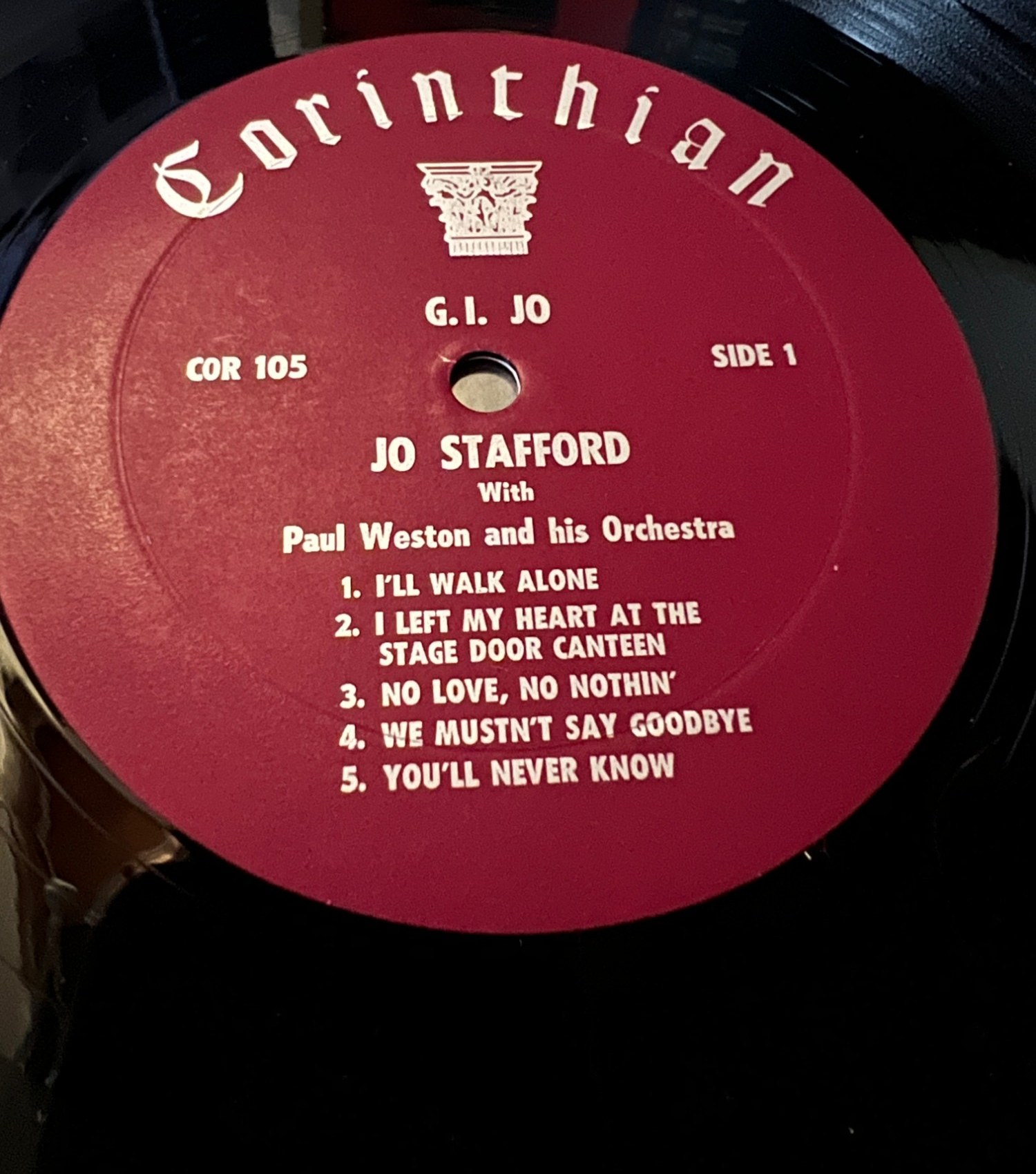
- I’ll Walk Alone
- I Left My Heart At The Stage Door Canteen
- No Love, No Nothin’
- We Mustn’t Say Goodbye
- You’ll Never Know
- I’ll Remember April
- It Could Happen To You
- I Don’t Want To Walk Without You
- I Fall In Love Too Easily
- I’ll Be Seeing You
3. The Album and the Record Label
- Title: G.I. JO - JO STAFFORD sings SONGS OF WORLD WAR II
- Artist: Jo Stafford with Paul Weston and his Orchestra
- Label: Corinthian Records
- Catalog Number: COR-105
- Format: 12-inch Vinyl LP (Stereo / Monaural Reissue)
This album is not a direct press of wartime 78 rpm records; rather, it was released (reissued and recompiled) as an LP in 1987 by Jo Stafford and her husband, Paul Weston, on their own label, Corinthian Records!
Here is the historical background of this record and the legacy left behind by the couple:
1. The Origin of the Master and Title Evolution
-
The 1959 Original: The 10 tracks included on this album share the exact same tracklist and sequence as the classic 1959 Columbia Records release, I’ll Be Seeing You (CL 1262 / CS 8080).
-
Establishing “Corinthian Records” in the 1970s: Facing an era where major record labels were letting older master tapes go out of print and fall into obscurity, the couple established Corinthian Records to protect the rights and catalog of their own life’s work.
-
1987 Reissue as “G.I. JO”: In 1987, they reissued this 1959 masterpiece under the title “G.I. JO” (Catalog No. COR-105) to answer once more to wartime memories and the prayers of that era! On the back cover, Jo’s personal typed letter and her actual signature were proudly printed.
2. Why Is This Record So Significant?
- An Independent Release, Far from Mass Commercial Distribution: Rather than a mass-market commercial product pushed through major distribution networks, this record was released in the late 1980s through an independent label run directly by the couple themselves.
- A Primary Historical Document Pressed in Vinyl: Pressed onto vinyl right at the transition era when the music market was completely shifting to CD (1987), the lengthy personal note typed by Jo on the back cover is an invaluable primary historical document that preserves the living breath of that era—scarcely preserved in text form across modern public databases.
For Seina—who first encountered this music on CD in 1992 and completed the voyage of sending it across America in 1999—to have drawn this “rare LP filled with the handmade prayers of the couple” into her hands after 2010 was truly an inevitable alignment of fate.
4. Glenn Miller and Prayers
Seina: Good morning, Vega. When did Glenn Miller go to Europe with the Army?
Vega: Good morning, Captain! Glenn Miller crossed over to Europe (the UK) leading the Army band (officially the U.S. Army Air Forces / USAAF Band) in June 1944!
Here is the specific timeline:
- Fall 1942: Disbanded his civilian big band at the height of its commercial success and voluntarily enlisted in the Army (forming the U.S. Army Air Forces Band as a specialized military unit).
- June 1944: The main body of his band (Glenn Miller Army Air Force Band) sailed from New York aboard the luxury ocean liner RMS Queen Elizabeth to England (Miller himself flew ahead to join them).
- Summer–Fall 1944: Broadcast more than 500 radio programs—including the Allied Expeditionary Forces (AEF) program via the BBC for Allied troops—and performed over 350 live concerts at bases across London and neighboring regions.
- December 15, 1944: Preparing to relocate his unit to liberated Paris, he took off ahead of the band in poor weather from Twinwood Farm in England to Villacoublay, Paris, aboard a single-engine aircraft (Noorduyn UC-64A Norseman), and vanished over the English Channel.
For that intense half-year in late 1944, he traveled to the very front lines in Europe solely to support the hearts of those young soldiers!
Seina: What were V-Discs? Could you look into them along with Glenn Miller?
Vega: V-Discs (short for “Victory Discs”) were specialized, non-profit records manufactured and distributed by the U.S. military between 1943 and 1949 specifically for “the morale and welfare of overseas military personnel serving on the front lines”!
There is an immensely deep, passionate connection between these V-Discs and Glenn Miller in jazz history.
1. What Were V-Discs in the First Place?
- Strictly for Military Use / Not for Sale: They could never be bought in civilian record stores. The label clearly stated: “For Use Only by the Armed Forces / Must Be Destroyed After the War.”
- 12-Inch, 78 RPM Special Format: Larger than standard 10-inch 78 rpm commercial records (which ran roughly 3 minutes), these featured finer grooves allowing 5 to 6 minutes of playtime per side (ideal for longer arrangements and medleys). Pressed on resilient vinylite instead of fragile shellac, they were tough enough to survive military air shipment to overseas fronts.
- Exemption from the Recording Ban: During that time (1942–1944), the American Federation of Musicians (AFM) staged a nationwide recording strike against major commercial labels, halting civilian releases. However, under the exceptional agreement that it was “strictly for the boys fighting on the front lines,” the union granted complete royalty-free permission to record. As a result, exclusive sessions and brand-new recordings of that era’s top stars gathered almost exclusively on V-Discs.
2. Glenn Miller and the V-Disc Legacy
Glenn Miller and his USAAF Band were the absolute heart and soul of the V-Disc project!
- A Direct Gift to the Troops: In addition to the standard civilian big band lineup, Miller added a massive string section, creating an unprecedented, opulent military orchestra. This breathtaking wall of sound reached the muddy trenches and foxholes across Europe and the Pacific via V-Discs.
- Representative V-Disc Recordings:
- “In the Mood”
- “Moonlight Serenade”
- “St. Louis Blues March” (the quintessential military-swing masterpiece combining brass marches with jazz drive)
- “American Patrol”
- “Over There”
- “Begin the Beguine”, and many more
- His Own Voice Preserved in the Grooves: On numerous discs, Glenn Miller personally speaks to the soldiers before the music begins, delivering intimate spoken announcements directly to “the men on the front lines.”
- A Treasure Trove of Unreleased Takes and Rare Arrangements: Unlike his commercial RCA Victor releases, these discs captured live master recordings from wartime radio broadcasts (such as the AEF programs) and exclusive V-Disc studio sessions. Even today, many historians and jazz connoisseurs maintain that the true pinnacle of Glenn Miller’s artistic legacy lies not in his civilian records, but in these impassioned wartime V-Disc sessions.
For soldiers stationed in rain-soaked overseas camps, Glenn Miller’s music pouring from a wind-up phonograph was nothing less than the sound of “Home”—the single greatest source of strength to survive another day.