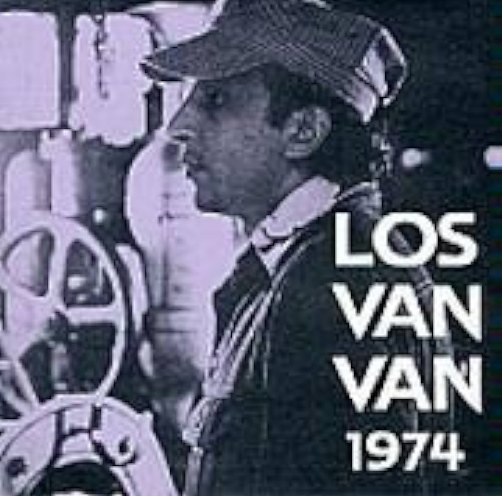
Liner Notes
Three years ago, in July, on my way back from N.Y., on JAL Flight 9006, I listened to an anthology of Cuban music edited by David Byrne. “Llegué, Llegué” was the seventh track. I will never forget that first shock, even now.
Partly because I chose it as the theme song for “Topaz” (Tokyo Decadence), I must have listened to it several hundred times by now, yet I never tire of it. On my third trip to Cuba, I was invited to the EGREM studio, where they let me hear the album “Los Van Van,” on which “Llegué, Llegué” is the first track. Every song was magnificent. It wasn’t just that it was magnificent music — I came to feel as though I had made some great discovery, as art.
I haven’t listened to rock since the Pistols. When the Pistols appeared, I thought, “Rock is dead, and only the beat remains.”
After that, I listened to reggae, New York salsa, the folk music of Asia and Africa and the Middle East, the jazz fusion of the American West Coast, film music, and oldies of every conceivable kind — but nothing I could call a musical experience happened to me. (Classical music aside.)
It was at such a time that I encountered the album “Los Van Van.” On the way back from Cuba to Japan it had been copied to a cassette, and I listened to the whole thing with Ryuichi Sakamoto in a hotel room in N.Y. It was the very first time Sakamoto and I had listened to an entire album together, all the way through (his own recordings aside).
“We made this album aiming for the highest level. Please, I want you to listen to it.” On the original jacket, there is such a “declaration” from the leader, Juan Formell.
The masterpiece that Los Van Van, the top band representing Cuba, created in 1974 has now, for the first time in the world, become a CD like this.
I declare with conviction that it is a monument of popular music standing alongside the Beatles’ “Sgt. Pepper’s,” the Rolling Stones’ “Beggars Banquet,” and Jimi Hendrix’s “Electric Ladyland.”
Ryu Murakami